


- Medical directory
- Specialities
- Specialised Units
 Teknon Cardiology Institute
 Obesity Unit
 Teknon Oncology Institute
 Bloodless Medicine and Surgery Unit
 Teknon Institute of Neurosciences
 Traffic Accident Care Unit
 Teknon Pulmonology Unit
 Maritime Medicine Unit
 Institute of Tissue Regenerative Therapy
 Teknon Pain Treatment Unit
 Teknon Tennis Clinic
 Systemic Inflammatory and Autoimmune Diseases Unit
 Assisted Reproduction Unit
 Sleep Unit
 Unidad de Síndromes de Sensibilización Central
 Unidad del Virus del Papiloma Humano
- Specialised Units
- Diagnostics
- Diagnostic tests
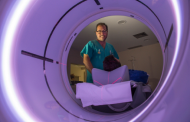 Diagnostic ImagingDiagnostic and interventional scans.
 Anatomical pathology laboratoryAllows to obtain a second opinion from renowned specialists.
 Clinical Analysis LaboratoryComprehensive service in the clinical area.
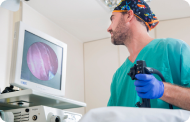 EndoscopyAn accurate diagnosis without conventional surgery.
 ElectrophysiologyFunctional exploration of the central nervous system.
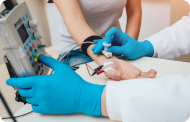 ElectromyographyClinical and neurophysiological evaluation of neuromuscular pathology.
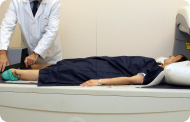 DensitometryDiagnostic technique for checking bone mineral density.
 UrodynamicsDiagnosis of urination disorders and incontinence.
- Medical check-ups

 GeneralThe most intelligent health check-up
 FullA comprehensive examination of your health
 Full PlusOur most exclusive check-up
 TravellersWhen travelling, your health is also part of your luggage
 SportA thorough review to boost your performance
 CardiologyGood news is knowing your heart is under control
 For companiesA tool that enhances employee satisfaction, productivity, and loyalty
- Diagnostic tests
- Our centre
- Teknon Healthcare Service Areas
 InpatientBright, functional and fully equipped rooms.
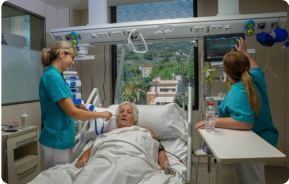 Semi-critical Care UnitEquipped with technology for diagnoses and treatments that require special care.
 Healthy Nutrition ProgrammeWe want to improve people’s health, which is why we promote healthy, conscious and sustainable nutrition at our hospitals.
 NursingOver 400 professionals.
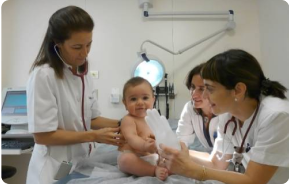 Emergency DepartmentUninterrupted operation, 24/7 at your service.
 Exclusivity / Teknon ClubCommitted to superior and individualised service, we furnish a full range of services in conjunction with our medical and healthcare support.
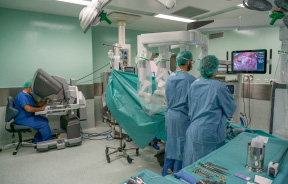 Surgical AreaA total of twenty (20) operating theatres, 12 of which are equipped for high-risk surgery.
 International ProgrammeA programme agent will provide you with comprehensive, personalised support
 Healthcare Ethics CommitteeGuidance for citizens and professionals in cases of moral conflicts.
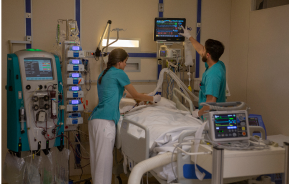 ICU-CCUMultipurpose unit incorporating treatment cubicles equipped with modern monitoring systems.
 Patient servicesAvailable to all our patients and their companions.
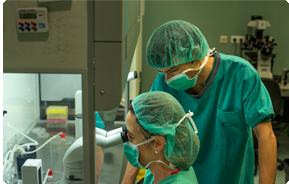 ResearchResearch is one of the cornerstones of Centro Médico Teknon.
 Personalised Follow-up ProgrammeWe accompany you throughout your medical journey. We organise your appointments and tests.
 Patient Quality and SafetyOur management models are based on the most stringent national and international standards.
- Teknon Healthcare Service Areas
- News
- News
 NewsKeep abreast of the events at Centro Médico Teknon. Visit our News section.
 AgendaHere we post upcoming events and discussions on relevant health topics. Visit our Agenda section to see what’s up.
 VideosThis section contains an extensive collection of videos related to our specialities.
 PodcastOur specialists discuss current medical topics, innovative treatments, health advice and patient experience.
 Health content
- News
- Blog


- Medical directory
- Specialities
- Specialised Units
- Teknon Cardiology Institute
- Obesity Unit
- Teknon Oncology Institute
- Bloodless Medicine and Surgery Unit
- Teknon Institute of Neurosciences
- Traffic Accident Care Unit
- Teknon Pulmonology Unit
- Maritime Medicine Unit
- Institute of Tissue Regenerative Therapy
- Teknon Pain Treatment Unit
- Teknon Tennis Clinic
- Systemic Inflammatory and Autoimmune Diseases Unit
- Assisted Reproduction Unit
- Sleep Unit
- Unidad de Síndromes de Sensibilización Central
- Unidad del Virus del Papiloma Humano
- Specialised Units
- Diagnostics
- Diagnostic tests
- Diagnostic ImagingDiagnostic and interventional scans.
- Anatomical pathology laboratoryAllows to obtain a second opinion from renowned specialists.
- Clinical Analysis LaboratoryComprehensive service in the clinical area.
- EndoscopyAn accurate diagnosis without conventional surgery.
- ElectrophysiologyFunctional exploration of the central nervous system.
- ElectromyographyClinical and neurophysiological evaluation of neuromuscular pathology.
- DensitometryDiagnostic technique for checking bone mineral density.
- UrodynamicsDiagnosis of urination disorders and incontinence.
- Medical check-ups
- GeneralThe most intelligent health check-up
- FullA comprehensive examination of your health
- Full PlusOur most exclusive check-up
- TravellersWhen travelling, your health is also part of your luggage
- SportA thorough review to boost your performance
- CardiologyGood news is knowing your heart is under control
- For companiesA tool that enhances employee satisfaction, productivity, and loyalty
- Diagnostic tests
- Our centre
- Teknon Healthcare Service Areas
- InpatientBright, functional and fully equipped rooms.
- Semi-critical Care UnitEquipped with technology for diagnoses and treatments that require special care.
- Healthy Nutrition ProgrammeWe want to improve people’s health, which is why we promote healthy, conscious and sustainable nutrition at our hospitals.
- NursingOver 400 professionals.
- Emergency DepartmentUninterrupted operation, 24/7 at your service.
- Exclusivity / Teknon ClubCommitted to superior and individualised service, we furnish a full range of services in conjunction with our medical and healthcare support.
- Surgical AreaA total of twenty (20) operating theatres, 12 of which are equipped for high-risk surgery.
- International ProgrammeA programme agent will provide you with comprehensive, personalised support
- Healthcare Ethics CommitteeGuidance for citizens and professionals in cases of moral conflicts.
- ICU-CCUMultipurpose unit incorporating treatment cubicles equipped with modern monitoring systems.
- Patient servicesAvailable to all our patients and their companions.
- ResearchResearch is one of the cornerstones of Centro Médico Teknon.
- Personalised Follow-up ProgrammeWe accompany you throughout your medical journey. We organise your appointments and tests.
- Patient Quality and SafetyOur management models are based on the most stringent national and international standards.
- Teknon Healthcare Service Areas
- News
- News
- NewsKeep abreast of the events at Centro Médico Teknon. Visit our News section.
- AgendaHere we post upcoming events and discussions on relevant health topics. Visit our Agenda section to see what’s up.
- VideosThis section contains an extensive collection of videos related to our specialities.
- PodcastOur specialists discuss current medical topics, innovative treatments, health advice and patient experience.
- Health content
- News
- Blog


- Specialised Units
 Human Papillomavirus Unit



Descripción
The Human Papillomavirus (HPV) Functional Unit at Centro Médico Teknon comprises a multidisciplinary team of healthcare professionals dedicated to improving the diagnosis, treatment, and follow-up of HPV infections.
Managing this type of pathology involves working in a cross-disciplinary manner in the following areas:
- Gynaecology
- Urology/Andrology
- Dermatology
- Coloproctology
- Otorhinolaryngology
- Paediatrics
- Psychology
- Oncology
Human Papillomavirus (HPV)
The Human Papillomavirus, known by the acronym HPV, is considered the most common sexually transmitted disease in the world for both sexes. In fact, it is estimated that more than 80% of sexually active people will come into contact with HPV.
The term HPV refers to a group of more than an estimated 200 interrelated viruses. Around 40 affect the genitals. Each year, 570,000 new cases of HPV-related cancers are diagnosed in women and 60,000 in men worldwide. Given this reality, it is important to raise awareness of the importance of prevention and early detection.
How is an HPV infection contracted?
Viruses that infect the genital area are spread through genital contact. Most HPV infections show no signs or symptoms, which is why infected individuals are generally unaware of it, even though they can still transmit the virus to their sexual partners. In some cases, it can be transmitted to the newborn through the birth canal if the mother is infected.
The symptoms
Warts located in different parts of the body can be a symptom, but most cases are asymptomatic.
There are two categories of sexually transmitted HPV.
- Low-risk HPV can cause warts on the genitals, anus, mouth or throat, or around these areas.
- High-risk HPV can cause various types of cancer: of the cervix, the anus, the mouth and throat, the vulva, the vagina, or the penis.
HPV and cancer
HPV causes virtually all cases of cervical cancer, around 90% of anal cancer, 75% of vaginal cancer, about 60% of penile cancer, 70% of vulvar cancer, and between 5% and 70% of oropharyngeal cancer (including the tonsils). It is also linked to approximately 100% of anogenital warts.
Treatment
Most HPV infections clear up on their own and do not cause cancer. But sometimes infections last longer. A high-risk HPV infection can cause changes in cells when it lasts many years. If these changes are not treated, they can worsen over time and develop into cancer. There are various treatments that do not involve medication.
Can it be prevented?
Sexual behaviour, early sexual activity, and the number of sexual partners determine the risk of infection. Proper use of latex condoms reduces the risk of contracting the infection, while vaccines can protect against several HPV types, having demonstrated great efficacy and effectiveness in preventing infection and benign and premalignant lesions related to this virus.
For prevention, gynaecological and urological visits are recommended to detect and treat any possible precancerous lesions.
Pap smears
Because early-stage cervical cancer causes no symptoms, women must undergo regular screening tests in order to detect any precancerous changes in the cervix that could lead to cancer. Current guidelines recommend that women aged 21 to 29 have a Pap smear every three years.
Women aged 30 to 65 are advised to continue having Pap smears every three years, or every five years if they also have HPV DNA testing at the same time. Women over 65 may stop having screening tests if they have had normal results in three consecutive Pap smears or if they had two HPV DNA tests and Pap smears without abnormal results.
HPV Vaccine
Gardasil 9 is an HPV vaccine approved by the US and European Medicines Agencies that can be used for both males and females. The vaccine protects against genital warts and precancerous and cancerous lesions affecting the cervix, vulva, vagina, and anus caused by the HPV types included in the vaccine.
The Centres for Disease Control and Prevention (CDC) recommend routine HPV vaccination for children aged 11 and 12, although it can be started from age 9. It is best for children to receive the vaccine before they have sexual contact and are exposed to the human papillomavirus. Research shows no link between receiving the vaccine at an early age and the early onset of sexual activity.
When someone is infected with the human papillomavirus, the vaccine is more effective at a younger age than an older age. However, if administered before infection, the vaccine can prevent cervical cancer.
The Centres for Disease Control and Prevention recommend that all children aged 11 and 12 receive two doses of the HPV vaccine at least 5 months apart. Children aged 9 and 10, as well as adolescents aged 13 and 14, can also receive the vaccine according to the updated two-dose schedule. Research has shown that the two-dose schedule is effective for children under 15 years of age.
Adolescents and young adults who start the vaccination series later require three doses of the vaccine from the age of 15.
The Centres for Disease Control and Prevention recommend catch-up human papillomavirus vaccinations for all individuals up to 26 years of age who have not been adequately vaccinated.
The United States Food and Drug Administration recently approved the use of Gardasil 9 for males and females from 9 years of age with no upper age limit.

Health and Wellbeing Blog







Both men and women can contract HPV.
It is estimated that approximately 80% of sexually active people will come into contact with HPV at some point in their lives.
It is usually a temporary infection that the body eliminates naturally, but in 10-15% of cases the immune system is unable to eliminate the virus and it can lead to cancer. HPV is responsible for 5% of all human tumours worldwide and is linked to 99% of cervical cancer, 99% of anal squamous cell carcinoma, 90% of genital warts, 78% of vaginal cancers, 53% of penile cancers, 30% of oropharyngeal cancers, and 25% of vulvar cancers.
HPV can be prevented through vaccination, condom use, and reducing the number of sexual partners.
Risk factors for acquiring HPV include early age at first sexual intercourse and number of sexual partners.
Factors contributing to the persistence and progression of HPV infection include tobacco, alcohol, immunosuppression (e.g., people with HIV), and other sexually transmitted infections, depending on the type of HPV.
Using condoms correctly could reduce the chances of contracting any sexually transmitted infection, including HPV infection. However, HPV could infect areas not covered by the condom, so condoms may not offer complete protection against HPV.
Having had an HPV infection and cleared it does not mean that you will never be infected again. You can become infected with HPV again, but if your immune system has been able to clear the infection, it is likely that if you become infected again, you will be able to clear it again. If you get vaccinated, it will protect you against future infections from the types of HPV included in the vaccine, which prevent 90% of cancers and 90% of genital warts caused by HPV.
In sexually active individuals, it is effective in preventing infection by HPV types that they have not been exposed to or that their immune system has eliminated. 85% of individuals eliminate HPV but can become reinfected.
Tests are only available for infections or lesions located in the cervix. Detection is based on cytology and HPV testing.
HPV can be contracted through sexual intercourse with a person infected with the virus. This disease can be easily spread during oral, anal, or vaginal sex, or through other types of close skin-to-skin contact during sexual activity.
Most people with HPV infection do not know they have it because they have no symptoms or because the lesions are difficult to see with the naked eye, either because of their size or location. Only genital warts show symptoms: although they do not cause pain, when irritated they can cause itching and bleeding.
HPV can be dormant and transmitted when the infected person shows no signs or symptoms, making it impossible to determine when the infection was acquired or who transmitted it.
No. It is very difficult to know who has transmitted an HPV infection to us, especially when we or our sexual partners have had previous relationships with other people. This virus is so common that it is possible that the infection was transmitted through sexual intercourse months or years ago and that the infection has not presented any symptoms, i.e. it has been silent until the moment of detection.

Our team is at your complete disposal.
 Centro Médico Teknon
Carrer de Vilana, 12, 08022 Barcelona
 Opening hours
Open 24 hours
 Phone Numbers
932 906 200
900 301 013