


- Medical directory
- Specialities
- Specialised Units
 Teknon Cardiology Institute
 Obesity Unit
 Teknon Oncology Institute
 Bloodless Medicine and Surgery Unit
 Teknon Institute of Neurosciences
 Traffic Accident Care Unit
 Teknon Pulmonology Unit
 Maritime Medicine Unit
 Institute of Tissue Regenerative Therapy
 Teknon Pain Treatment Unit
 Teknon Tennis Clinic
 Systemic Inflammatory and Autoimmune Diseases Unit
 Assisted Reproduction Unit
 Sleep Unit
 Unidad de Síndromes de Sensibilización Central
 Unidad del Virus del Papiloma Humano
- Specialised Units
- Diagnostics
- Diagnostic tests
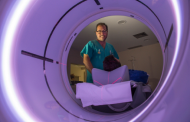 Diagnostic ImagingDiagnostic and interventional scans.
 Anatomical pathology laboratoryAllows to obtain a second opinion from renowned specialists.
 Clinical Analysis LaboratoryComprehensive service in the clinical area.
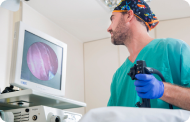 EndoscopyAn accurate diagnosis without conventional surgery.
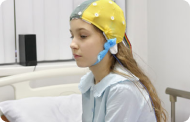 ElectrophysiologyFunctional exploration of the central nervous system.
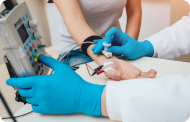 ElectromyographyClinical and neurophysiological evaluation of neuromuscular pathology.
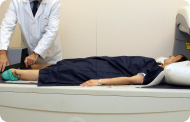 DensitometryDiagnostic technique for checking bone mineral density.
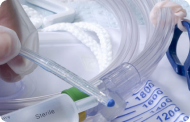 UrodynamicsDiagnosis of urination disorders and incontinence.
- Medical check-ups

 GeneralThe most intelligent health check-up
 FullA comprehensive examination of your health
 Full PlusOur most exclusive check-up
 TravellersWhen travelling, your health is also part of your luggage
 SportA thorough review to boost your performance
 CardiologyGood news is knowing your heart is under control
 For companiesA tool that enhances employee satisfaction, productivity, and loyalty
- Diagnostic tests
- Our centre
- Teknon Healthcare Service Areas
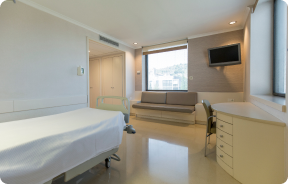 InpatientBright, functional and fully equipped rooms.
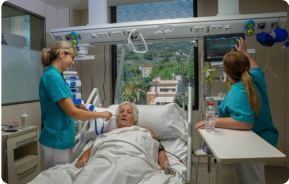 Semi-critical Care UnitEquipped with technology for diagnoses and treatments that require special care.
 Healthy Nutrition ProgrammeWe want to improve people’s health, which is why we promote healthy, conscious and sustainable nutrition at our hospitals.
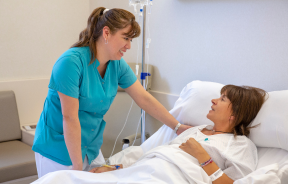 NursingOver 400 professionals.
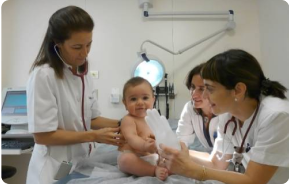 Emergency DepartmentUninterrupted operation, 24/7 at your service.
 Exclusivity / Teknon ClubCommitted to superior and individualised service, we furnish a full range of services in conjunction with our medical and healthcare support.
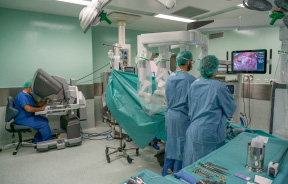 Surgical AreaA total of twenty (20) operating theatres, 12 of which are equipped for high-risk surgery.
 International ProgrammeA programme agent will provide you with comprehensive, personalised support
 Healthcare Ethics CommitteeGuidance for citizens and professionals in cases of moral conflicts.
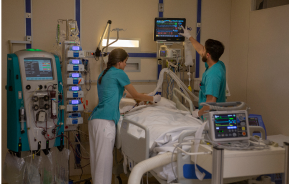 ICU-CCUMultipurpose unit incorporating treatment cubicles equipped with modern monitoring systems.
 Patient servicesAvailable to all our patients and their companions.
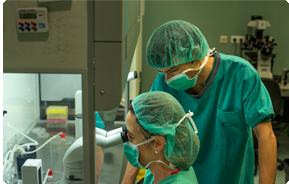 ResearchResearch is one of the cornerstones of Centro Médico Teknon.
 Personalised Follow-up ProgrammeWe accompany you throughout your medical journey. We organise your appointments and tests.
 Patient Quality and SafetyOur management models are based on the most stringent national and international standards.
- Teknon Healthcare Service Areas
- News
- News
 NewsKeep abreast of the events at Centro Médico Teknon. Visit our News section.
 AgendaHere we post upcoming events and discussions on relevant health topics. Visit our Agenda section to see what’s up.
 VideosThis section contains an extensive collection of videos related to our specialities.
 PodcastOur specialists discuss current medical topics, innovative treatments, health advice and patient experience.
 Health content
- News
- Blog


- Medical directory
- Specialities
- Specialised Units
- Teknon Cardiology Institute
- Obesity Unit
- Teknon Oncology Institute
- Bloodless Medicine and Surgery Unit
- Teknon Institute of Neurosciences
- Traffic Accident Care Unit
- Teknon Pulmonology Unit
- Maritime Medicine Unit
- Institute of Tissue Regenerative Therapy
- Teknon Pain Treatment Unit
- Teknon Tennis Clinic
- Systemic Inflammatory and Autoimmune Diseases Unit
- Assisted Reproduction Unit
- Sleep Unit
- Unidad de Síndromes de Sensibilización Central
- Unidad del Virus del Papiloma Humano
- Specialised Units
- Diagnostics
- Diagnostic tests
- Diagnostic ImagingDiagnostic and interventional scans.
- Anatomical pathology laboratoryAllows to obtain a second opinion from renowned specialists.
- Clinical Analysis LaboratoryComprehensive service in the clinical area.
- EndoscopyAn accurate diagnosis without conventional surgery.
- ElectrophysiologyFunctional exploration of the central nervous system.
- ElectromyographyClinical and neurophysiological evaluation of neuromuscular pathology.
- DensitometryDiagnostic technique for checking bone mineral density.
- UrodynamicsDiagnosis of urination disorders and incontinence.
- Medical check-ups
- GeneralThe most intelligent health check-up
- FullA comprehensive examination of your health
- Full PlusOur most exclusive check-up
- TravellersWhen travelling, your health is also part of your luggage
- SportA thorough review to boost your performance
- CardiologyGood news is knowing your heart is under control
- For companiesA tool that enhances employee satisfaction, productivity, and loyalty
- Diagnostic tests
- Our centre
- Teknon Healthcare Service Areas
- InpatientBright, functional and fully equipped rooms.
- Semi-critical Care UnitEquipped with technology for diagnoses and treatments that require special care.
- Healthy Nutrition ProgrammeWe want to improve people’s health, which is why we promote healthy, conscious and sustainable nutrition at our hospitals.
- NursingOver 400 professionals.
- Emergency DepartmentUninterrupted operation, 24/7 at your service.
- Exclusivity / Teknon ClubCommitted to superior and individualised service, we furnish a full range of services in conjunction with our medical and healthcare support.
- Surgical AreaA total of twenty (20) operating theatres, 12 of which are equipped for high-risk surgery.
- International ProgrammeA programme agent will provide you with comprehensive, personalised support
- Healthcare Ethics CommitteeGuidance for citizens and professionals in cases of moral conflicts.
- ICU-CCUMultipurpose unit incorporating treatment cubicles equipped with modern monitoring systems.
- Patient servicesAvailable to all our patients and their companions.
- ResearchResearch is one of the cornerstones of Centro Médico Teknon.
- Personalised Follow-up ProgrammeWe accompany you throughout your medical journey. We organise your appointments and tests.
- Patient Quality and SafetyOur management models are based on the most stringent national and international standards.
- Teknon Healthcare Service Areas
- News
- News
- NewsKeep abreast of the events at Centro Médico Teknon. Visit our News section.
- AgendaHere we post upcoming events and discussions on relevant health topics. Visit our Agenda section to see what’s up.
- VideosThis section contains an extensive collection of videos related to our specialities.
- PodcastOur specialists discuss current medical topics, innovative treatments, health advice and patient experience.
- Health content
- News
- Blog


- Specialities
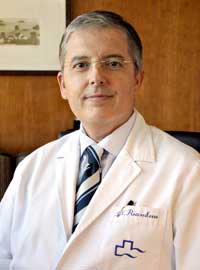
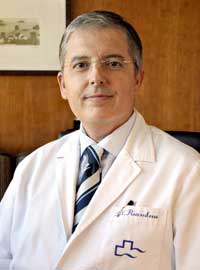
 Riambau Alonso Vicente
- Our services
- Main Pathologies
- Patologías de las extremidades inferiores
- Varicose Veins
 Centro Médico Teknon

What are varicose veins?
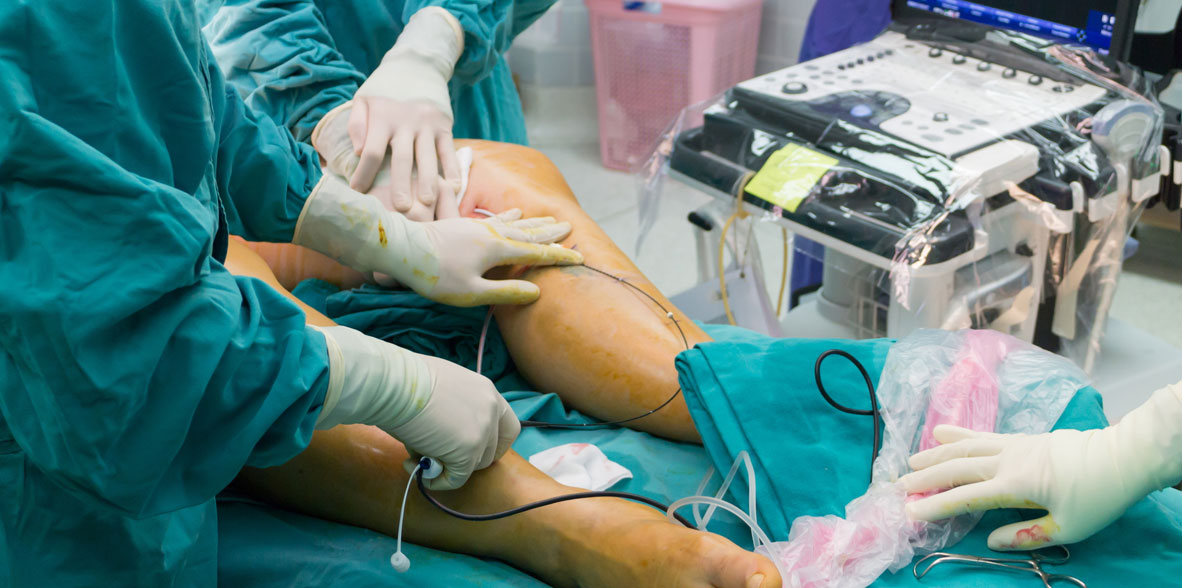
Varicose veins are alterations in the circulatory system produced by the effects of standing, that is to say, by the fact that a man walks and remains standing erect during the day and throughout his life.. This posture forces the circulatory system to make an extra effort to get blood to return to the heart by beating the force of gravity and the return circulation or venous is especially complicated in the legs.
If a leg is subjected to long hours of standing on the feet and in a limited space, it will end up, in venous insufficiency in the lower extremities. This is the common case of ironers, for example. Sedentary life style and obesity, as well as lack of exercise, complicate the venous return of blood from the extremities.
But venous pathology is also hereditary, and some people are pre-disposed genetically to this "varicose inheritance." The manifestation of the symptoms, in these cases, appears at a very young age.
Women suffer much more than men from this type of disorder because hormonal factors influence it. The female hormones cause a weakness in the venous wall which induces a great dilatation of it. During pregnancy, besides the already known hormonal increment, the pressure of the uterus exerts a mechanical effect, which has increased in size, on the greater veins that carry the venous return from the legs to the heart. This circumstance consequently results an extra effort which adds to the excess weight born by the legs during pregnancy.
Also the hormones destined for ovulatory control in the child-bearing years, or those that others consider indicated to avoid symptomatology of menopause collaborate in the early appearance of varicose veins.
With respect to the possibilities of treatment, neither unique method nor any miracle-working applications exists to eradicate varicose veins. But, as always occurs in medicine, that which is fundamental is to do an adequate therapeutic indication in the function of the parameters such as age, the evolving degree of the varicose veins, their location, the hormonal factors and risk factors, etc.
In the case of the increasing dilatations in the muscles of women which oscillate after 40 years of age, called "spider webs" or "spider veins," the therapeutic methods, and not always satisfactory ones are microesclerosis and/or electrocoagulation.
Other types of varicose veins, known as spider veins, and which depend directly on the principal system of the saphenous veins, are treated with percutaneous chemical sclerotherapy. Although it is a quite effective method, it is vital to be familiar with and to command the technique and the possible complications that could occur.
And finally, with regard to the evolving varicose condition which affects the principal system of the saphenous veins with valvular insufficiency, the most effective treatment is a surgical one, by means of which the whole varicose system is stripped and the circulation ligated will be distributed through the lesser veins.
But as with any pathology, and before arriving at it, it is important to take a series of precautions, which although they might not eliminate the problem, they will help to prevent possible complications.
We should try to avoid a sedentary life stay, to have a balanced life, to perform more physical exercise. Always avoid weight gain, not only as an aesthetic problem, but because it favors the appearance of circulatory disorders, not to wear tight clothes and to watch hormonal disorders.
- Complications of varicose veins
It is noteworthy to single out the two main types of complications produced by varicose veins:
- The venous ones and the dermatological ones
- Among the first ones, we have varico-hemorrhage and venous rupture
Varico-hemorrhage
Varicorragia trombophlebitis is an obliterating thrombophlebitis of the superficial varicose cord. Its evolution seems to be benign, but the recurrences are frequent. The symptoms begin bruskly with a pain all along the hardened venous cord..
In the external venous rupture, the skin is so fine that even a minimum trauma can produce a hemorrhage, and in the case of the internal one, the volume of the calf increases considerably, and at the same time, one feels an intense pain after any time of effort or exercise. The functional impotence and the hematoma begin immediately.
The dermatological complications are important because of their frequency and because of their functional, professional l and social repercussions. They can affect all the tissues..
The essential mechanical factor that determines them is stasis, owing to some superficial venous hyperpressure..
- Four types of dermatological complications may occur.
- Dermatititis
- Capillarities (capallaritis)
- Hyperdermic skin sclerosis
- Ulcers
- Dermatitis
Dermatitis can be of an infectious type, even though owing to the improvement in living conditions, it is seen less.
Also, it can produce an eczema, and even though we find it in different forms, it is always pruritic.
- Capallaritis
This affects the capillaries. It may be of an inflammatory of infectious types.
- Dermohypedermite sclerosis
Dermohyperdermite sclerosis is the warning sign of an ulcer. It presents with the appearance of a film of thin skin? a plaque of smooth skin , hard, impossible to mobilize and which adheres to the deep planes. It can be complicated with inflammatory acute breakouts, then the treatment, usually deceptive, is made on a base of Vitamin E, oleate, an oil of soy and avocado, emollient creams, creams to prevent scarring, products that in no case, work miracles.
- Ulcer
See Ulcers.