



- Medical Units
- Specialities
- Doctors’ offices
- Medical directory
- Diagnostics
- Our centre
- News


- Medical Units
- Specialities
- Doctors’ offices
- Medical directory
- Diagnostics
- Our centre
- News


- Specialities
 Teknon Oncology Institute
- Treatments and Specialities
- Radiation Oncology Unit
Radiation Oncology Unit
The Radiation Oncology Department, led by Dr. Ignacio Toscas, is a core service of Centro Médico Teknon and is integrated within the Teknon Oncology Institute. It is equipped with two state-of-the-art linear accelerators.
Our team of physicians, medical physicists, and radiation therapists is highly qualified in the use of this cutting-edge technology, with the aim of improving cure rates while minimizing the side effects commonly associated with conventional radiotherapy.
Radiotherapy
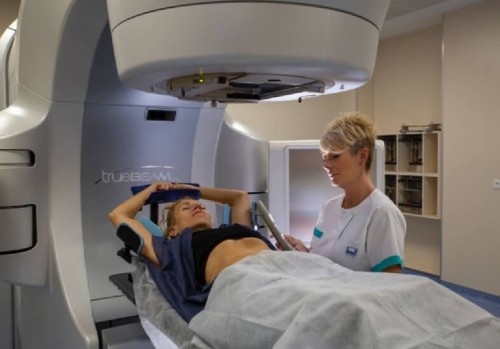
Minimizing the radiation dose delivered to healthy tissues is a primary objective of every radiotherapy treatment. This can be achieved through highly precise techniques such as Intensity-Modulated Radiation Therapy (IMRT), Image-Guided Radiation Therapy (IGRT), respiratory motion management and synchronization techniques (Gating), and RapidArc.
The Radiation Oncology Department at the Teknon Oncology Institute is a pioneer in the implementation of these technologies. The recent addition of the TrueBeam STx treatment unit equipped with the Calypso® System enables us to remain at the forefront of radiotherapy and continue providing our patients with the latest generation of advanced treatments, achieving excellent disease control while minimizing treatment-related toxicity.
Among its many features, the TrueBeam STx treatment unit includes:
A PerfectPitch® robotic treatment couch with six degrees of freedom, allowing treatments to be delivered with automated precision.
An HD120 Multileaf Collimator (HDMLC120) with 2.5 mm leaves, enabling highly complex, high-resolution treatments such as stereotactic radiosurgery, treatment of arteriovenous malformations, and fractionated stereotactic radiotherapy.
A 4D Cone Beam CT (4D CBCT) image-guidance system, which acquires images for accurate patient positioning immediately before treatment and allows analysis of tumor motion and volume changes, supporting adaptive radiotherapy.
An advanced respiratory motion management (Gating) system, enabling continuous monitoring and synchronization of breathing with radiation delivery.
The Calypso® electromagnetic transponder tracking system, a real-time tumor localization and tracking technology that continuously provides information on tumor position throughout treatment. Based on Beacon® electromagnetic transponders and the GPS for the Body® technology, the system detects even the smallest tumor movements, ensuring that the radiation beam remains accurately aligned with the target. This improves treatment accuracy while reducing the risk of side effects.
Chemotherapy
The goal of chemotherapy is to destroy the cells that make up the tumor in order to reduce or eliminate the disease.
These drugs reach virtually every tissue in the body, where they exert their effects on both cancerous and healthy cells.
Under normal circumstances, the division of healthy cells is strictly regulated by control mechanisms that determine when a cell should divide and when it should remain stable.
In general, chemotherapy acts during the division phase of cancer cells, preventing them from multiplying and ultimately destroying them. Over time, this leads to the reduction or disappearance of the malignant tumor.
Medical Team:
Dr. Ignacio Toscas Vigara, Director, Radiation Oncology Unit
Dra. Mercè Balagué Monte
Dr. Raymond Miralbell Izard, Radiation Oncology Unit Advisor
Addressing concerns, dispelling doubt
When your doctor prescribed radiotherapy treatment, you probably had many questions. You would discuss some of them with the doctor, who gave you the appropriate information and guidance, but you probably still have questions about issues that you did not raise at the time.
This document aims to provide additional information to what you've already received, and concurrently, it can help inform your partner or close relatives, and address any questions they might have presently or in the near future.
Our intention when writing it was to ensure that the information it contains is practical and easily understandable. That is why we wanted to avoid overly scientific explanations or excessive detail. Therefore, if you already have information and would like to learn more about a particular topic, please do not hesitate to ask us: we are at your disposal.
Below are answers to our patients’ most frequently asked questions.
What is radiotherapy treatment?
It is the local treatment of an area of the body using ionising radiation, which aims to permanently destroy malignant cells present within the body. The objectives of radiotherapy treatment are:
- RADICAL: it aims to cure the patient
- COMPLEMENTARY to surgery. Its purpose is curative, either to reduce tumour volume before surgery (pre-surgery) or to destroy residual disease after surgery (post-surgery).
- PALLIATIVE: it aims to slow tumour growth and control or alleviate possible symptoms: pain, bleeding, etc.
How is radiotherapy administered?
Radiotherapy treatments can be administered in a single dose (one day of treatment) or in fractionated doses (several days of treatment).
The total number of sessions varies depending on the total dose required according to the protocol. Treatment time generally varies between 3 and 6 weeks, with one session per day.
I have heard that radiotherapy causes many side effects. Is this true?
Radiation is not harmless and therefore does cause side effects, particularly in the healthy tissue surrounding the tumour tissue.
These effects do not occur in all cases, as they depend on the dose administered, the area of the body treated, and the patient's physical and emotional state. The most common and frequent effect is fatigue.
Side effects depending on the location (irradiated area) are:
Head and neck treatments:
- Reddening of the treated area
- Skin flaking
- Localised loss of hair or body hair
- Appearance of an ulcer on the mucous membrane (inside of the cheek, tongue, and gums)
- Dry mouth
- Stinging or itching in the throat when eating acidic, spicy, salty foods, etc.
- Difficulty and/or pain when swallowing
- Decreased sense of taste, unpleasant taste sensation (metallic taste)
Brain treatments:
- Headache
- Alopecia (hair loss)
- Nausea
- Vomiting
- Dizziness
- Drowsiness, lack of concentration
Treatment in the thoracic/chest area:
- Reddening of the treated area
- Skin flaking, itching or stinging
- Discomfort when swallowing food
Treatment in the abdominal area:
- Nausea
- Vomiting
- Heartburn
Treatment in the pelvic area:
- Abdominal pain (cramps, spasms, etc.)
- Diarrhoea
- Vaginal discomfort
- Discomfort when urinating
- Anal discomfort
- Increased sensation to defecate
And if side effects appear, what should I do?
Before starting treatment, your doctor and nurse will tell you about the possible side effects and recommend guidelines to help you cope with them. In any case, and as a reminder, below are some tips on what to do depending on the symptom:
Skin conditions
- As treatment progresses, the skin may show symptoms similar to those of a sunburn caused by excessive exposure to the sun (redness, itching, pain, peeling).
- Before each treatment, the skin should be clean and dry, free of creams, oils, or cosmetic treatments. Taking care of your skin will help reduce the effects of treatment. Therefore, it is advisable to apply a moisturising cream to the irradiated area every day, a few hours after the treatment.
- It is not advisable to wear tight-fitting clothing or clothing made from synthetic materials. In areas where clothing comes into contact with irradiated skin, the most suitable fabrics are cotton and linen.
Diarrhoea
- Reduce your consumption of fibre-rich foods, such as vegetables, wholemeal products, and fruits such as oranges, tangerines, pineapples, kiwis, etc. Fried foods, milk and dairy products are also not recommended.
- Increase your fluid intake (water, mild tea, rice water, carrot water, etc.).
- As for solid foods, we recommend rice and boiled carrots, white fish or skinless chicken, boiled or steamed, and toast.
Constipation
- If you were already experiencing this problem, consult your doctor to see if you should continue your usual medication.
- If constipation has developed during treatment, it may be possible to resolve it by making small changes to your diet, such as increasing your intake of fibre-rich foods, for example:
- Whole grains
- Fruit (kiwi fruit, in addition to its nutritional qualities, has laxative properties and you can eat 2 or 3 a day)
- Vegetables
- It is important to drink plenty of fluids. At least 1.5 litres per day.
- A good complement to these tips is to take a daily walk or do moderate physical exercise.
Difficulty swallowing food
- The cause of this side effect is irritation of the mucous membranes in the mouth and throat, which manifests itself through a burning sensation, redness, sores, and pain when swallowing food.
- If this effect occurs, consult your doctor or nurse, who will prescribe the most appropriate products to reduce its effects.
- In any case, if symptoms appear, try to avoid eating acidic, salty or spicy foods and drinks. Similarly, avoid very hot meals.
- Do not forget to follow the oral and dental hygiene habits explained below.
Fatigue
- This is probably the most common effect of radiotherapy treatments. Fatigue does not necessarily or exclusively manifest itself as physical tiredness, but also as difficulty concentrating or performing intellectual or physical tasks that could previously be carried out normally.
- In fact, the cause of fatigue is not known with certainty, and it can also occur in varying degrees. In general, it depends on factors such as age, gender, treatment time, nutrition, etc.
- The following recommendations will help improve your condition if you suffer from this effect:
- Plan daily rest periods.
- Try to organise your activities so that you can carry them out at times of the day when you feel most rested, or after adequate rest.
- Inactivity will not help improve your condition. It is preferable to try to do some kind of gentle physical activity on a regular basis. For example, walking, swimming if you know how to swim, etc.
I am taking medication. Can I continue to do so?
Some medicines, including painkillers such as aspirin, may be contraindicated during treatment.
For this reason, whenever you need to take any medication, you should inform your radiation oncologist, who will provide you with the appropriate information.
Do I need to follow any special lifestyle regime?
The treatment you will need to follow does not require you to confine yourself or isolate yourself.
In this document, we aim to provide recommendations to help you adapt to the new situation, but we believe that good advice is to try to change your habits or activities only when you consider it necessary, and to strive to continue your family, social and even work life as normally as possible. This will be of great assistance to you.
However, there are some aspects you should bear in mind regarding food and personal hygiene:
Nutrition
- Foods that are overly spicy or contain sauce are difficult to digest, so it is best to avoid them.
- Alcoholic beverages are not recommended.
Personal hygiene and skin care
- Keep your skin clean and dry. You should not use moisturising creams or oils before treatment. Use only soft mitts or sponges and, when drying, do so without rubbing, so as not to irritate the skin. It is advisable to take care not to erase any marks that have been made to delimit the area to be irradiated, in case these are not permanent.
- Try to keep your skin moisturised after treatments, using creams prescribed by your radiotherapist if necessary, because radiotherapy causes dry skin. In the event of radiation treatment to the head and neck area, ensure you maintain good oral hygiene, bearing in mind the following guidelines:
- Brush your teeth after every meal.
- Use a soft brush.
- Do not use mouthwashes or any type of mouthwash because the mucous membrane will be particularly sensitive. A good alternative is to rinse with room temperature water and bicarbonate of soda (one teaspoon of bicarbonate of soda per glass of water).
- If the area to be irradiated includes the mouth and/or jaws, visit your dentist before starting radiotherapy treatment.
- You should avoid exposure to sunlight on the irradiated area, which should be kept covered.
- It is very important that you consult us before undergoing any cosmetic treatment or hair removal, or if you wish to have a massage.